Your kids' bed is more than just a bed - it's where they dream, play, and grow! Whether you’re looking for an addition to the toddler transition room or some space-saving solutions for a shared space, the right bed makes bedtime that little bit easier. Shop our kids' bedroom furniture range and find the best beds for kids, from cosy toddler beds to fun bunk beds and versatile single frames for growing kids!
 By wilko
- 5th August 2026
- 6min read
At a glance: Which bed does your child need?
As a rough guide:
- Ages 18m–4 yrs: Toddler bed (low to ground, built-in guardrails)
- Ages 4–6 yrs: Standard single or cabin bed (built-in storage)
- Ages 6+ yrs: Bunk bed, mid-sleeper, or high sleeper (Space-saving & elevated sleep)
Not sure which category your child falls into? Read on for the full breakdown of each bed type, plus our safety and space-planning tips.
Choosing by bed type: finding the best match for your little one’s age & room
Every child is different, and we’ve got a wide range of bed types designed to suit different ages, personalities, rooms, and styles.
Toddler beds for first-bed transitions
Moving from a cot to a bed can feel like a big change for your child, but our toddler beds are there to make it as fun and seamless as possible. They’re specifically designed with little ones in mind, with high sides, bed guards, and rounded edges to keep them safe.
These beds are also available in a range of fun colours, themes, and styles for every kid! Choose from JCB diggers, princess castles, and family favourite characters like the Gruffalo, and find a bed that matches your child’s personality.
Best bunk beds for kids and shared bedrooms
A bunk bed is a staple for siblings and sleepovers alike, and for very good reason. They’re super space savers, add a sense of fun to any room, and are often more cost-effective than buying two individual single beds. All of our bunk beds here at wilko are designed to be sturdy and safe, giving you that extra peace of mind - plus, many of them come with storage for toys, games, books, and more. The only trouble with these is deciding who gets top bunk!
Mid-sleepers and cabin beds for extra storage and play
A mid-sleeper or cabin bed is a raised single bed that sits higher than a normal bed but lower than a high-sleeper or top bunk - equally as good for making dens as they are for making the most of your space! These beds come in a range of different shapes and styles, ranging from options with lots of storage for toys, desks for homework, and even slides!
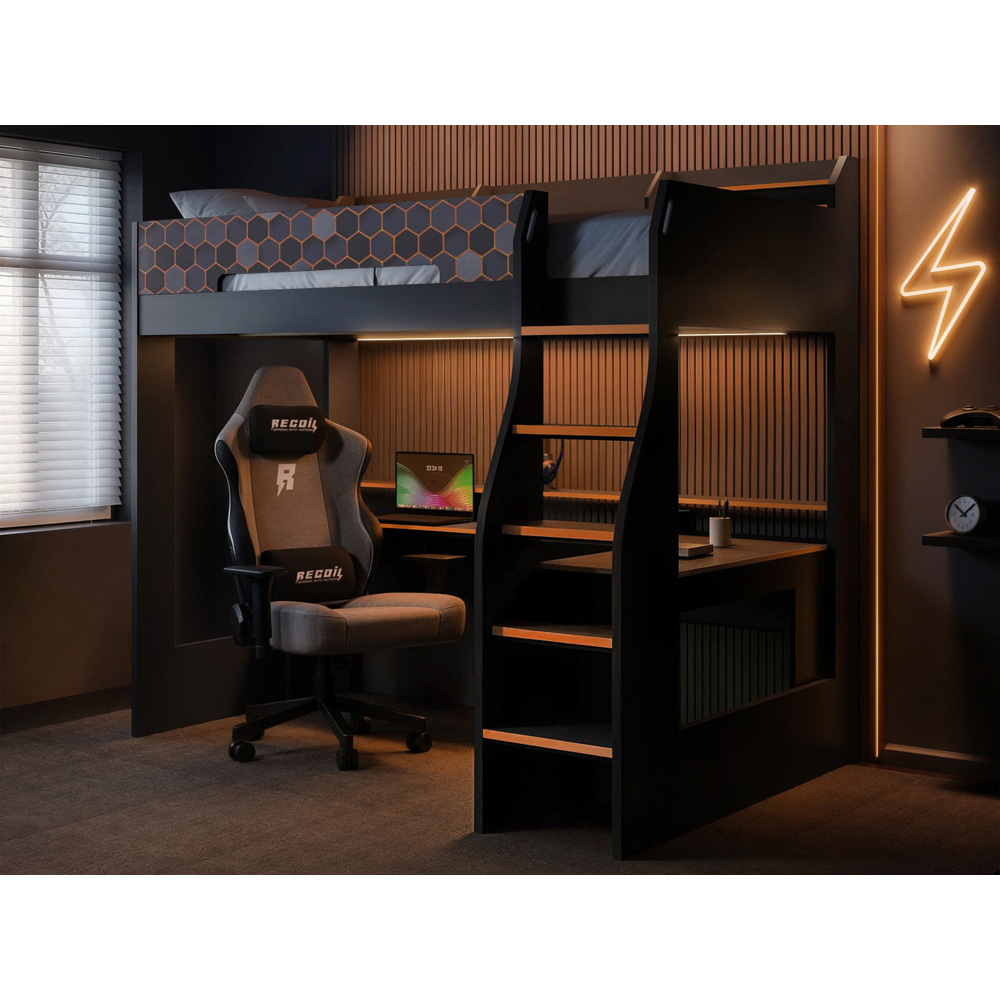
High-sleepers and loft beds for older kids and smaller bedrooms
High-sleepers (or loft beds) elevate you slightly further than a mid-sleeper, giving your child even more room to kit out the space left underneath! Gaming zone? Homework desk? Cosy book nook? Let their imagination run wild!
Standard single beds that stand the test of time
A single bed is a great choice if you’re looking for a versatile bed that will grow with your little one, from a child into their teenage years. Comfy, cosy, and space efficient, they’re ideal for everything from smaller bedrooms to student digs.
Room sizing, ceiling height & layout planning: how to measure before you buy
When you’re buying your child’s bed, you’ll want to make sure it fits the room comfortably without blocking doorways or storage. Before adding a frame to your basket, grab a tape measure and run through these essential space-planning checks.
How much ceiling clearance do you need above a child’s bed?
If you are considering an elevated frame like a bunk bed, mid-sleeper, or high sleeper, measuring your floor-to-ceiling height is your most important safety step. It’s a painful bump on the head otherwise!
Planning floor clearance: Ladders, desks & drawers
A bed frame's dimensions only tell part of the story. You also need to allow for the "action zone" around the bed so drawers open and the kids can move around the bed safely.
- Angled vs. straight ladders: Slanted ladders are easier for younger children to climb, but they extend an extra 30-50 cm into the room. Check that an angled ladder won't block doors or wardrobes.
- Pull-out desks & furniture: For mid-sleepers with pull-out desks, allow at least 80 cm of clear floor space in front of the frame so the desk can extend with room for a chair.
- Under-bed drawers: Ensure at least 60 cm of open floor space alongside the bed to pull out storage drawers smoothly.

Kids' bed storage hacks: Maximising small bedroom space
Tired of stepping on Lego or tripping over toys when you walk into your child’s room? The good news is that kids’ beds can be super handy storage solutions… if you know how to make the most of them.
Beds with built-in drawers are perfect for storing daily clothes, shoes, and toys - and they’re really simple for kids to access independently. Just make sure that you have enough space for the drawers to extend fully.
Ottoman beds are another handy option. They’re a super efficient solution for smaller rooms, as they use 100% of the underbed space and are completely hidden. Most people would use these to store unused bedding and bulk seasonal clothing, but they’re equally good for storing away games, toys, and books if you’re tight on space.

Safety standards to look out for
Your child's safety always comes first, so it's worth knowing what to check for before you buy - especially with bunk beds and elevated frames.
BS EN safety standards
All bunk beds sold in the UK should meet BS EN 747-1 and BS EN 747-2, which cover structural safety and guardrail requirements. Look out for:
- Guardrails on both sides of the top bunk, with no gaps larger than 7.5 cm
- A fixed ladder or steps, securely attached to the frame
- A minimum internal height of 30 cm between the top bunk mattress and the ceiling of the lower bunk (for headroom underneath)
Age guidance for bunk beds
The top bunk of a bunk bed isn't recommended for children under 6 years old, regardless of their height. If you have a younger sibling sharing the room, consider a mid-sleeper for the older child instead, so the lower bed remains at floor level.
Mattress sizing & safety matching for kids' beds
A great bed frame is only half the job - getting the right mattress matters just as much for comfort, support, and safety.
- Toddler beds typically use a cot bed mattress (140 x 70 cm) - check your frame's exact size before buying, as this can vary.
- Bunk and mid-sleeper top bunks should use a mattress no deeper than 15 cm, to keep the guardrails effective.
- Single beds use a standard single mattress (190 x 90 cm), giving you the widest range of comfort and support options to choose from.
Find your perfect fit
Shop our full kids' bedroom furniture range and find the bed that fits your space, your budget, and your child's style.
FAQs
What age is a toddler bed suitable for?
Toddler beds are generally suitable from around 18 months to 4 years old, or until your child outgrows the frame.
Is a bunk bed or mid-sleeper better for a small room?
Both are great space savers, but a mid-sleeper tends to work best for smaller single-occupancy rooms, while a bunk bed is the better choice if there’s two kids sharing a room.
How do I know what size mattress my bed needs?
Check the product listing for the exact mattress dimensions required, as this can vary between toddler, single, and specialist bunk bed sizes.
Get in touch with us on Facebook, Instagram, X or TikTok.