How to choose a pressure washer
When it comes to satisfying cleaning jobs, blasting dirt away with a pressure washer is way up there. If you’re upgrading your car cleaning setup or looking to pressure wash your patio, but getting washed away with all the technical specs, this blog is for you! We’ll be looking at what you should look for when choosing a pressure washer, and what we’d recommend for specific jobs. Let’s get started!
 By Alex
- 15th May 2026
- 5min read
What to look for when buying a pressure washer
Garden power tools are a bit of a puzzle of letters and numbers at the best of times. Here are all the things you’re likely to find when shopping for a pressure washer:
Water pressure
This is measured in bar. The higher the bar, the higher the pressure of the water coming from your nozzle and the more powerful the pressure washer will be.
You’ll often see PSI mentioned too, which stands for ‘pounds per square inch’, another way of measuring the force of the water coming out of your pressure washer.
Flow rate
This is measured in litres per hour, describing the amount of water that comes out of your pressure washer. A higher flow rate will get rinsing jobs done faster – perfect for cleaning the car, for example.
Power
Electric pressure washers are measured in watts/W, and petrol pressure washers are measured in horsepower/HP. Generally speaking, these numbers will correlate with the water pressure and flow rate, so we’d recommend concentrating on those mainly!
How does a pressure washer work?
Most pressure washers will have a water inlet that you attach a hose to. Once it’s taken in enough water, the motor inside (either electric or petrol) will shoot it back out through the high-pressure hose at great speed, letting you effortlessly cut through dirt and grime at the pull of a handle.
Popular pressure washer options
Electric pressure washers
These are very common pressure washers for home use, ideal for pretty much any cleaning task from washing the car to cleaning a patio. As they’re plugged into the mains, you can use them for as long as you need.
Petrol pressure washers
These are heavy-duty pressure washers designed for challenging surfaces such as concrete. They’re more expensive to run, but you do get unparalleled cleaning power in return.
Cordless pressure washers
These are perfect for jobs which require a bit more flexibility. They’re battery-operated and are absolutely fine for smaller cleaning tasks, including washing garden furniture and bikes.
The best pressure washers for your outdoor jobs
Many modern pressure washers will have adjustable water pressures for a variety of jobs. Here’s what we’d recommend for the most common power washer uses:
Washing the car
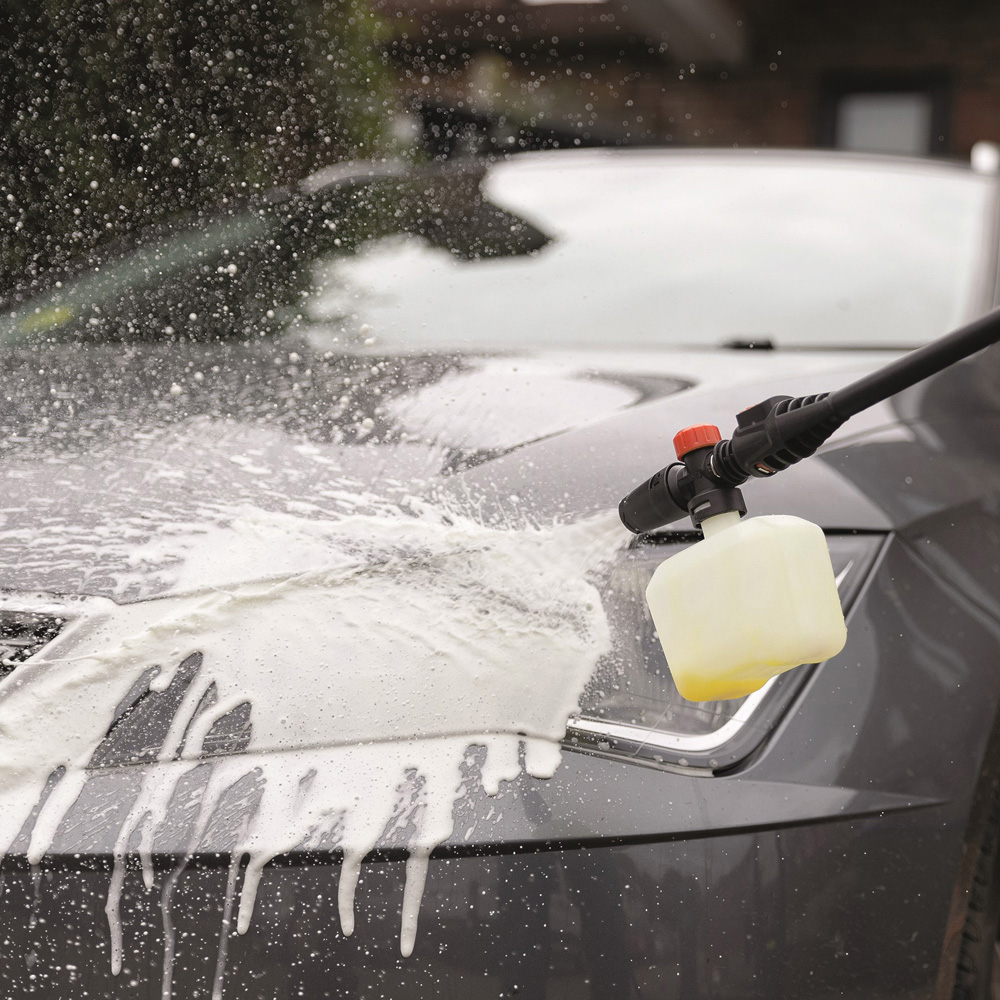
We’d recommend an electric pressure washer between 90-130 bar for general car maintenance, but you could go higher if it’s particularly grimy! A higher flow rate would also be a benefit here as it’ll get the job done quicker.
When using a pressure washer to clean your car, don’t put the nozzle too close, or you could damage it. Many pressure washers come with detachable brush attachments to make scrubbing easier, and even detergent tanks to make the whole thing faster!
Don’t forget to make sure your hose pipe is long enough, and that you have the right connectors.
Cleaning the patio
A medium-duty pressure washer will be perfect for most patios, somewhere between 100 and 130 bar. If you’re dealing with a large area, or one which is particularly dirty, a high-powered petrol version could also be a good alternative.
As with most applications, don’t put the nozzle too close to your patio when cleaning. As well as increasing the risk of damaging it, it’ll most likely splash all over the place – including you!
Washing your patio is possible without a pressure washer – learn how here.
Power washing the decking
To be on the safe side, we wouldn’t recommend going above 100 bar for pressure washing the decking, or you could permanently damage the wood. After it’s clean and dry, it’s a great idea to pop on some wood treatment or paint to revitalise the wood and keep it going for another season.
Garden furniture
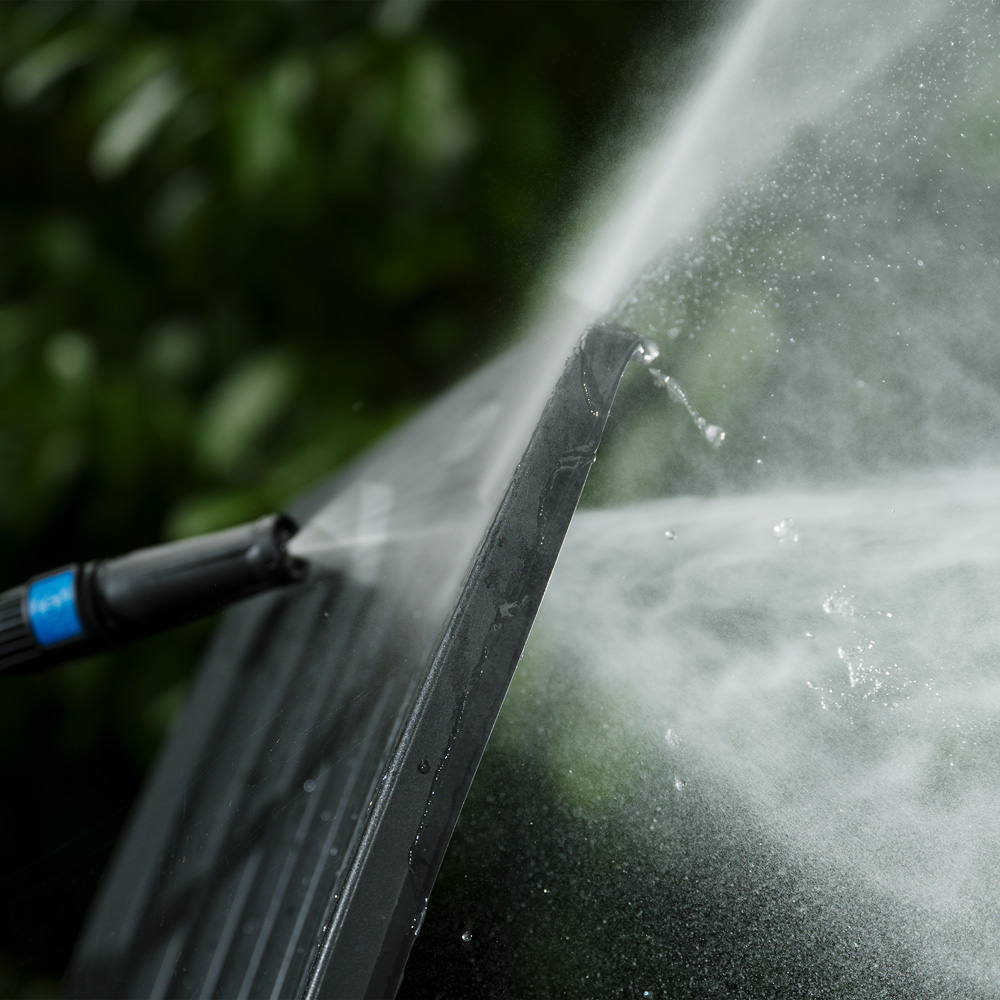
Use a lower bar for cleaning your garden furniture, whether it’s rattan, wood, or metal. Light-duty pressure washers around 70-100 bar are absolutely fine for cleaning the surface and getting into those nooks and crannies!
Other things to look out for
Hose length
Shorter hoses are perfect for small jobs around the garden, but if you’re washing the car or a patio, grab a pressure washer with a longer hose to make things easier.
Lance length
The lance is the section you hold onto. Longer lances will make things easier on your back as you won’t have to bend over to reach certain spots.
Nozzle attachments
Certain models come with brush attachments for patios and cars, which can help you do an even better job!
Detergent tanks
Mixes with the water to make shampooing your car faster than ever.
FAQs
Where should you not use a pressure washer?
Pressure washers are very powerful and shouldn’t be used on anything soft, and especially not on plants, humans or pets. Avoid using your pressure washer on old mortar, damaged surfaces like chipped wood, electrical fixtures, painted surfaces, and windows.
What specs should I look for in a pressure washer?
The water pressure (measured in bar or PSI) and flow rate (measured in litres per hour) are the most important specs to determine the power and efficiency of your pressure washer.
Is 3,000 PSI too strong to wash a car?
Aim for around 1,200 to 1,500 PSI (or 90 to 130 bar) for general car maintenance. Any higher and you risk damaging the paint.
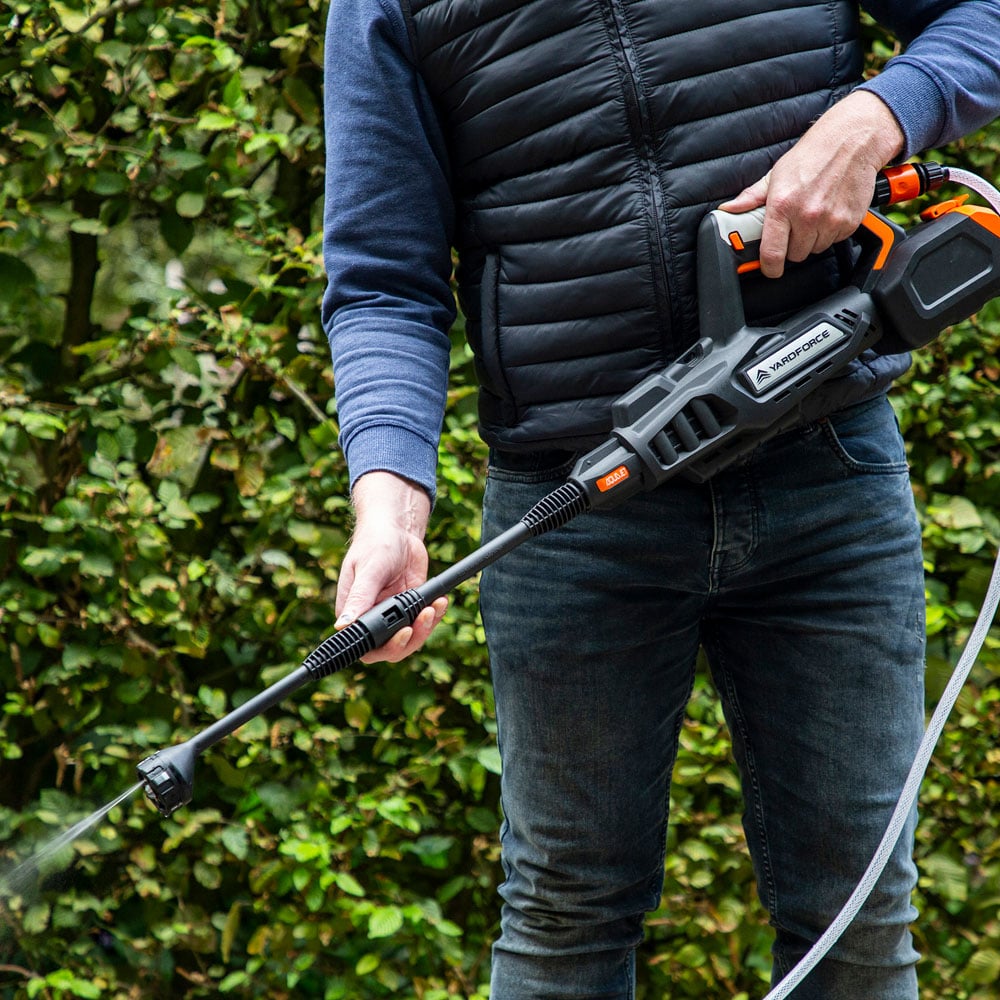
Is there anything better than a pressure washer before-and-after pic? We don’t think so! Share yours with us on Facebook, Instagram, X or TikTok.