Rain seems like a part of everyday life here in the UK, especially at this time of year. Although a few showers are great for our gardens, too much rain can start causing problems. Luckily, there are a few things you can do to avoid standing water in your garden, and they’re easy enough that almost anyone can do them!
 By Alex
- 11th Feb 2026
- 5min read
Why are there puddles on my lawn and patio?
If your lawn or flowerbeds are plagued with puddles, it’s normally down to compacted soil with poor drainage – though after a period of drought, it can also be due to especially dry soil.
Puddles on hard surfaces like patios mean that the rain doesn’t have anywhere to go, either due to sloped surfaces or a lack of drainage.
Keep an eye on where water seems to collect after heavy rain – check your lawn for muddy patches without grass, and moss growth on your patio, as this is a sign that water is hanging around for too long.
A few small adjustments here and there can make a world of difference, so pop your wellies on and let’s get to work!
How to reduce standing water on your lawn
Let it breathe
Make sure it has the chance to absorb rainwater by clearing any leaves or debris from the surface, as these can make your lawn very soggy indeed! Simply grab a rake and work it over the surface, which will also clear off moss and thatch which may be holding on to more water.
Aerate the soil
The soil under your lawn becomes compacted over time, especially if it’s seen a lot of activity – things like family football matches, heavy patio furniture, and garden parties can all lead to solid soil which isn’t so good at absorbing water.
Thankfully, aerating your lawn isn’t as hard as it sounds! Just grab a garden fork and use it to stab holes all over your lawn – don’t worry, you won’t be harming the grass! There are also purpose-built aerators that will save you some time and effort.
Level lumpy lawns
If you’ve got puddles or muddy patches on your grass which take ages to dry out, it may be that your lawn isn’t level.
To flatten any dips, mix two parts topsoil, two parts sand, and one part compost. For dips 3cm deep or less, it’s as easy as filling the dip with your mix, levelling with the back of a rake, and firming it down by lightly stepping on it. Repeat this process until the dip is level with your lawn. Finish off with a light sprinkling of grass seed, and you’re all done!
For tips on dips more than 3cm, our blog on how to level a lumpy lawn has you covered.
Recruit some leafy plants
The more plant life you have in your beds, the less likely you are to have muddy beds. Plants with large leaves, like hydrangea, are excellent at catching rain, but any plant will do! They’ll also improve the soil structure and drainage, keeping your flowerbeds muddy-puddle-free.
Fixing water pooling on your patio
Give it a clean
If you’ve got puddles on your patio, start by giving it a good clean. If joints or gaps between slabs have become blocked with leaves or moss, water will have a harder time draining away. Use a stiff brush to clean away any debris, or get the good old power washer out to clean it down.
Check the slope
Sometimes patios will naturally have a slope to them. Ideally, this should be away from the house. You can make things a little easier by sweeping any standing water off the patio with a broom after a period of wet weather.
Upgrade your patio slabs
If you’re looking to replace your patio, now’s the perfect time to consider a gravel alternative or permeable paving. This will give you all the benefits of a sturdy patio with the bonus of being porous, allowing water to seep away naturally – that’s one less puddle to worry about!
With a little bit of DIY know-how, it’s feasible to install permeable paving yourself. As well as being stylish, they’re practical for all outdoor areas, including your driveway. If you’re worried about weight, many of our pavers can support upwards of 60 tonnes in weight – that’s the same as two double decker busses carrying a fully grown elephant each!
Tips & tricks for periods of heavy rain
Keep drains & guttering clear
Your gutters are likely to overflow if they’re full of leaves and other bits, so venture up there once a year or so to give them a good old clean. Same with drains – if they’re full of debris, the water will eventually overflow and end up all over your garden.
Make the rain work for you
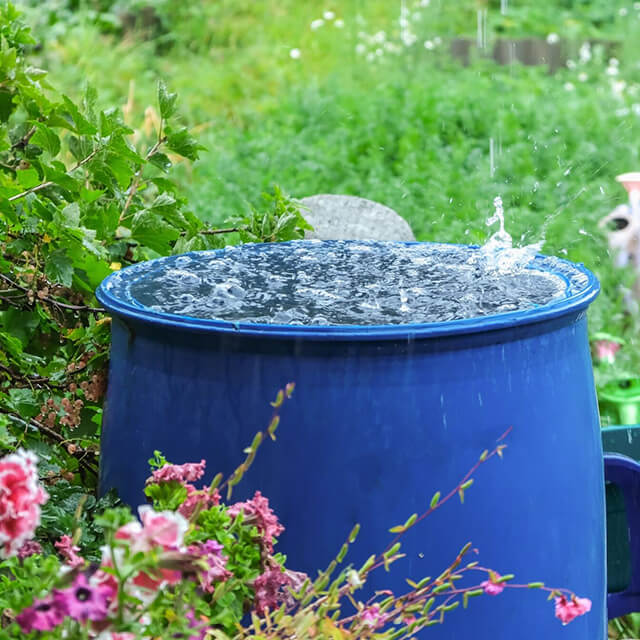
It’s not all doom and gloom! Rain is free water, and you can use it to keep your garden watered all through spring and summer by installing a water butt or two. By attaching one to your downpipe, shed, or greenhouse, you can harvest and use all that rainwater in the garden for months, saving you a bit of cash on your water bills. The plants prefer it, too.
For the full guide, read our blog on how to install a water butt. It’s easy!
Remember, it’s almost impossible to avoid standing water entirely, especially when the rain is heavy, but these small changes can help you out in bad weather. So, next time it rains, just pop the cuppa on and wait for that little patch of blue sky!
Any wet-weather hacks we should know about? Let us know on: Facebook, Instagram, TikTok & X.
< Back to Ideas & Advice